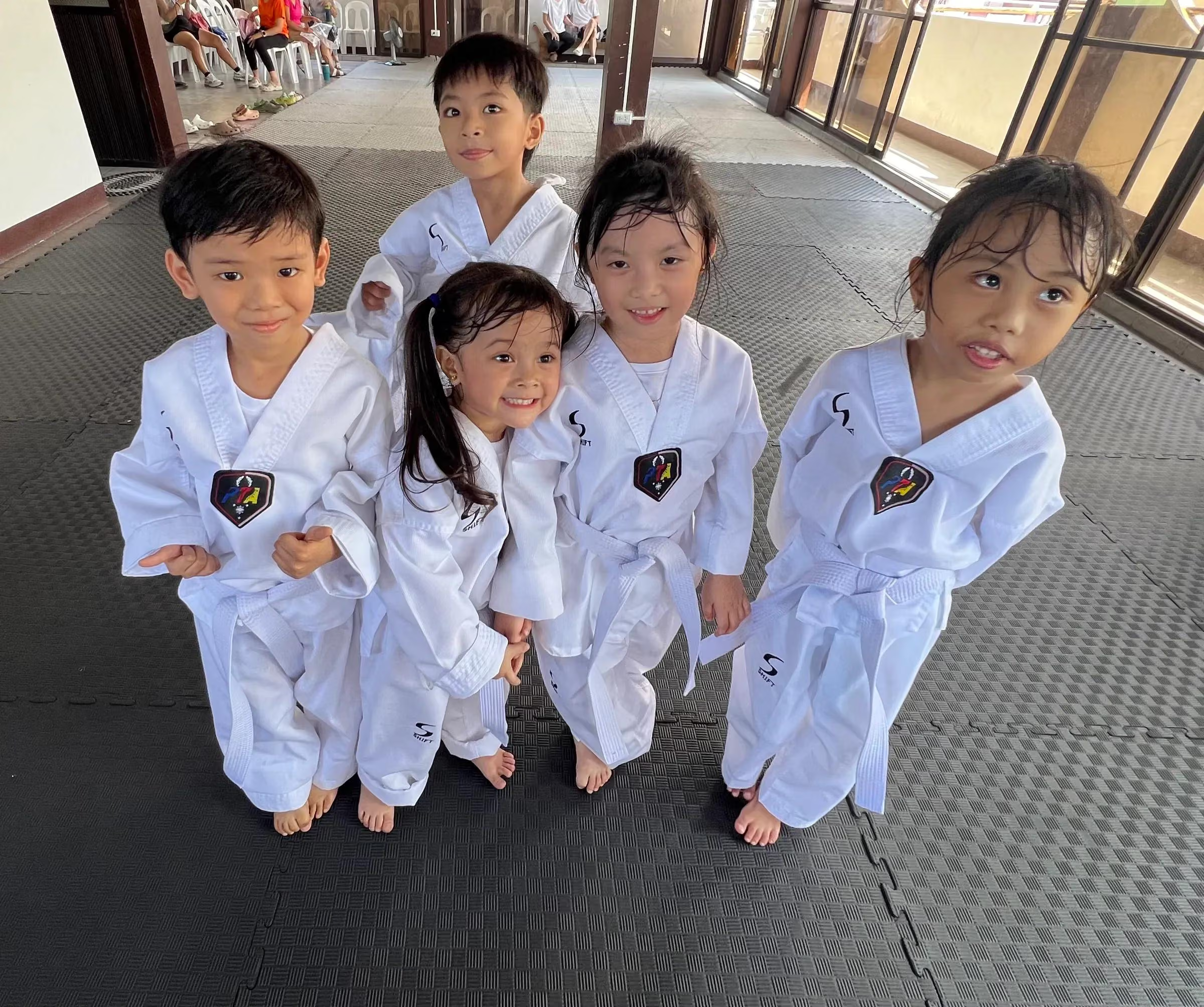
"My son can't sit still for five minutes — will he even last in a class?" It's one of the most common questions from parents of high-energy kids. In our experience, those are often the kids who end up thriving most, because taekwondo doesn't ask a child to suppress their energy — it gives it somewhere specific to go.
Why Structure Works Better Than "Sit Still"
Open-ended activities and unstructured free time put the burden entirely on a child to self-regulate, with no framework to help. A taekwondo class works differently:
- Constant movement, built in. There's no long stretch of sitting and waiting — warm-ups, drills, and technique keep kids physically engaged for most of the class.
- Clear, simple rules. Listen for the whistle, wait your turn, respect the mat. Energetic kids often do better with concrete rules than with vague instructions to "calm down."
- Redirection over punishment. Coaches are trained to channel excess energy into the next drill rather than scold a child for having it.
- A physical outlet for restlessness. A kick, a strike, a sparring round — all legitimate, sanctioned ways to burn energy that a classroom never allows.
- Short, achievable goals. The next stripe, the next belt. High-energy kids often respond well to goals they can see and reach quickly.
What the Research Says
Research on physical activity and attention in children is genuinely encouraging. A 2023 systematic review and meta-analysis of 10 randomized controlled trials found that physical activity had a moderate effect on improving attention problems in school-age children with ADHD, and that cognitively engaging exercise — activities that require thinking and reacting, not just repetitive motion — was significantly more effective than plain aerobic exercise like running on a treadmill (Effect of physical activity on attention in school-age children with ADHD, Li et al., Frontiers in Physiology, 2023). Taekwondo — reacting to a coach's call, remembering a sequence, timing a strike — fits squarely in that cognitively engaging category.
To be clear: taekwondo isn't a treatment for ADHD or any diagnosed condition, and it doesn't replace medical or behavioral support. If you have concerns about your child's attention or behavior, talk to your pediatrician. What we can say from experience is that a structured class is often an easier fit for a high-energy child than an unstructured one.
What to Expect in Class
- Coaches are used to redirecting energetic kids and won't single a child out for having energy.
- Classes move fast enough that there's rarely a long stretch of standing still.
- Your child's excitement and energy are an asset here, not a problem to manage out of them.
Which Program Fits
- Ages 3–6: Little Tigers — short bursts of activity built for a young child's attention span.
- Ages 7–12: Junior Warriors — structured technique and sparring fundamentals with a clear routine.
- Ages 13 and up: Teens & Adults.
Every first class is free at all three of our branches in Taguig and Parañaque. Book a free trial class and see how your child responds to the structure.
Common Questions
Is taekwondo good for hyperactive kids?
Often, yes. Its structure, movement, and clear rules tend to suit energetic kids better than open-ended activities that require them to self-regulate with no framework.
Will my high-energy child be singled out or punished for being too active?
No. Coaches are trained to redirect energy into the next drill rather than scold a child for having it.
Is taekwondo a substitute for ADHD treatment?
No. It isn't therapy and doesn't replace medical or behavioral support — talk to your pediatrician about any diagnosed condition. It can be a good structured outlet alongside that support.
Will constant movement disrupt the rest of the class?
Classes are built around movement and clear routines, so an energetic child fits the structure rather than disrupting it.