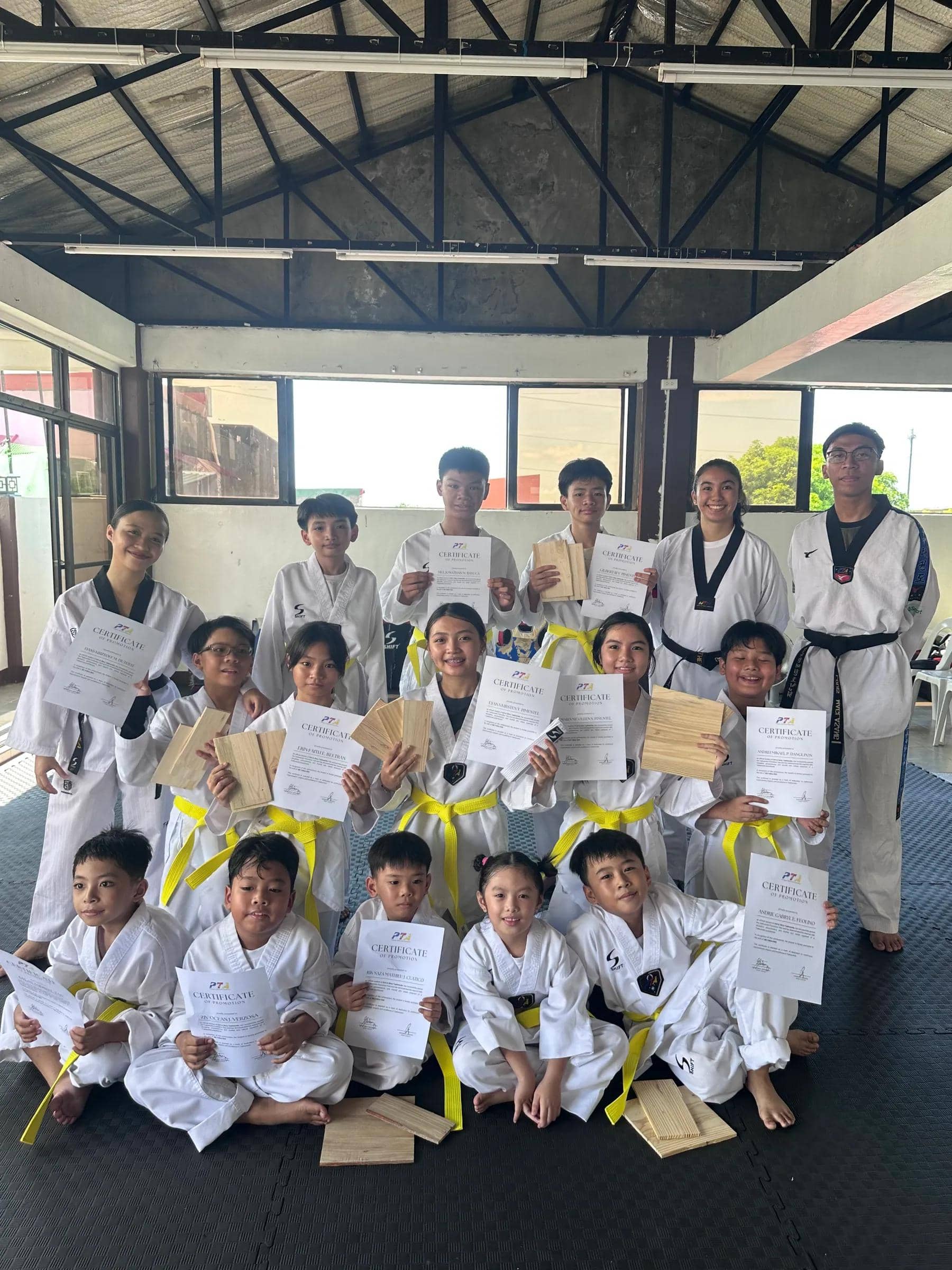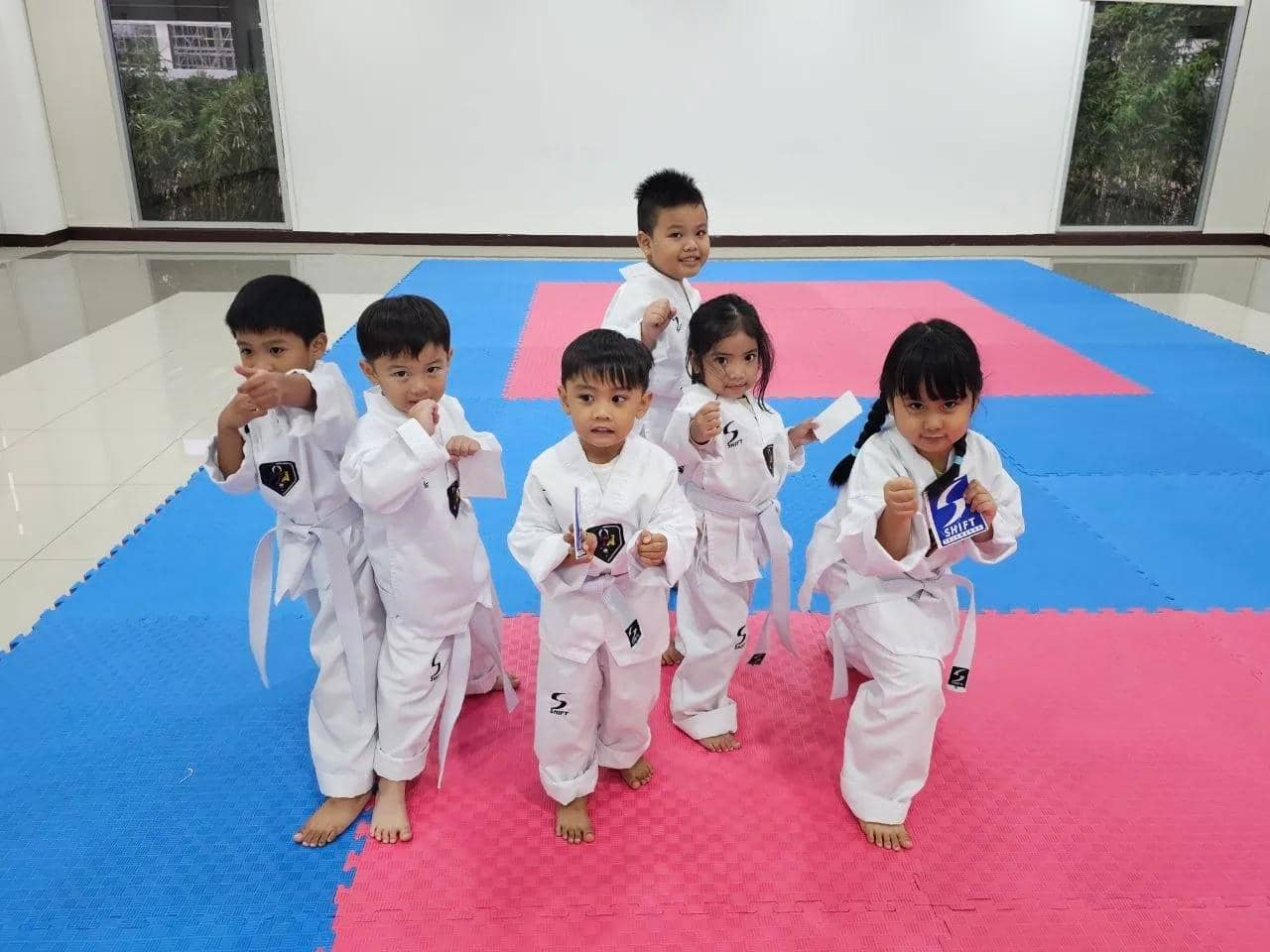

The first grading is often the first time a child is formally assessed one-on-one by an instructor, and it's natural for both of you to feel nervous about it. Here's exactly what to expect, and how to help your child walk in prepared.
How a Student Gets to Grading Day
Gradings usually happen every 2–3 months, but there's no fixed calendar date. A coach puts a student forward only when they're genuinely ready — your child's grading isn't a surprise pop quiz; it's the result of weeks of visible progress their coach has already been tracking.
What Actually Happens at a Grading
- Forms (poomsae). Your child performs the set pattern of movements for their current belt, in front of instructors.
- Technique demonstration. Basic stances, blocks, and kicks, checked for correct form.
- Light sparring, for eligible ranks. Once a student is ready for it, grading may include brief, controlled sparring matched to their level.
A grading isn't a competition — your child isn't judged against other kids in the room. They're assessed against the specific requirements for their next belt, at their own pace.
How to Help Your Child Prepare
- Practice forms at home. A few minutes a few times a week keeps technique sharp between classes. Our home practice guide has simple drills you can do together.
- Keep attendance consistent in the weeks before. Consistency in the lead-up matters more than a single intense practice session.
- Ask the coach directly. "What should we work on before grading?" is a question every coach is happy to answer.
- Talk through what grading day looks like. Familiarity reduces nerves more than almost anything else — walk your child through the format above before the day arrives.
- Keep the goal on effort, not the outcome. "Show your best forms" is something your child can control. Whether they pass isn't something to put pressure on beforehand.
Managing Grading-Day Nerves
Nervousness before a grading is completely normal, even for kids who've done it before. A calm, confident coach and a routine your child has practiced dozens of times in class go a long way. Arrive a little early, stick to your child's normal pre-class routine, and avoid adding last-minute advice right before they step up — by then, the preparation is already done.
What Happens After
If your child is ready, they'll be awarded their new belt and told what's required for the next one — a fresh, visible goal to work toward. If a coach feels more time is needed on a specific technique, that's not a failure; it's the no-shortcut system working as intended. Every belt at Grit & Glory is earned, never handed out for showing up, which is exactly why it means something when your child finally ties it on. Our post on how belt promotions build grit goes deeper into why we grade this way.
Questions Before Grading Day
Your child's coach is always the best source for questions specific to your child's readiness. For general questions, book a free trial class or visit any of our branches in Taguig and Parañaque.
Common Questions
How will I know my child is ready for grading?
Their coach decides, based on consistent progress in class — there's no fixed schedule, so being put forward is itself a sign of readiness.
Will my child spar at their first grading?
Only if they've reached a rank where sparring is part of the requirements. Many early gradings are forms and technique only.
What if my child doesn't pass?
They'll be told exactly what to work on and continue training toward the same belt. Every student eventually earns it through real effort — there's no shortcut, and no penalty for needing more time.
How can we practice at home?
A few minutes of forms practice a few times a week helps. Our home practice guide has structured drills to use between classes.