If you're new to Taekwondo, the vocabulary can feel like a second language — because it partly is. Most terms are Korean, carried over from the sport's origins, and every good dojang keeps them rather than translating everything to English. Here's a plain-English glossary of what you'll actually hear, organized by when you'll hear it.
Basic Terms
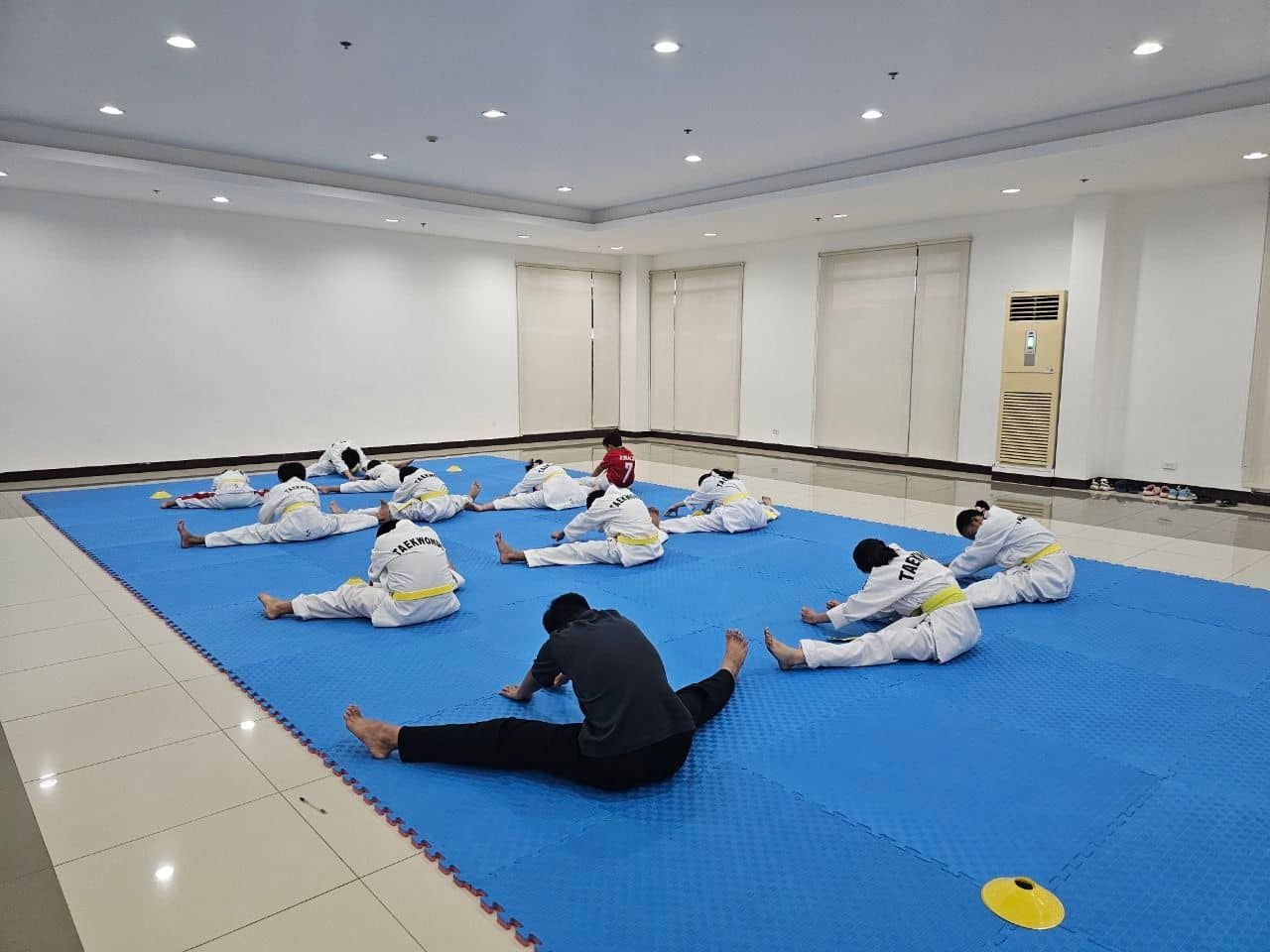
Dojang — The training hall or studio where classes are held. (Some schools use "dojo," the Japanese term, but "dojang" is the correct Korean word for a Taekwondo school.)
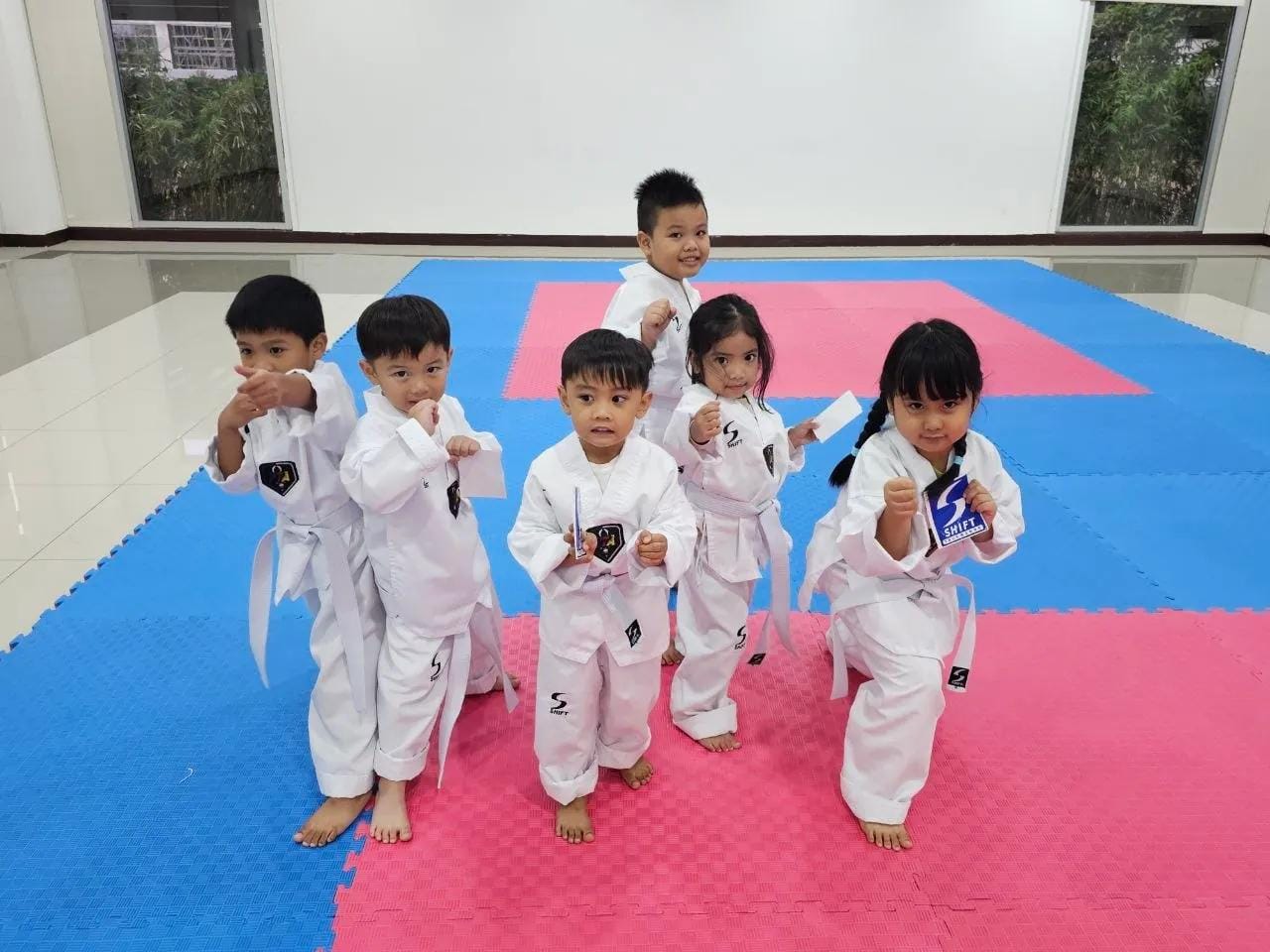
Dobok — The uniform students wear once enrolled: a lightweight jacket-and-pants set, usually white, tied with the belt.
Poomsae — A pre-set sequence of movements — blocks, strikes, kicks, and stances — performed in a specific pattern. Poomsae is how technique is tested at every grading, and it's the martial-arts equivalent of a memorized routine: precision matters as much as power.
Kyorugi — Sparring. At Grit & Glory, sparring is introduced gradually and appropriately for age and rank — it isn't full-contact fighting, especially for younger or newer students.
Kihap — The sharp shout students make when executing a technique with full commitment. It's not just noise — it engages the core, sharpens focus, and signals confidence.
Rank and Belt Terms
Geup (Gup) — The rank system for color belts, counting down toward black belt. A student's first colored belt starts at a higher geup number; each promotion lowers the number until they reach 1st geup, the rank just before black belt.
Poom — The official junior black-belt rank for students under 15, awarded by the Kukkiwon. A Poom belt is split horizontally, half red and half black — a visible signal that a student has reached expert-level technique but hasn't yet reached adult age.
Dan — The official adult black-belt rank (15 and older), also Kukkiwon-certified. Dan ranks run from 1st Dan up through 9th Dan (Grandmaster). See our full belt order guide for exactly how the progression works at Grit & Glory.
Kukkiwon — World Taekwondo Headquarters, based in Seoul, South Korea. It's the official certifying body for Poom and Dan black-belt ranks worldwide — which is why a black belt earned here means the same thing as one earned anywhere else.
Class and Etiquette Terms
Charyeot — "Attention." Students come to a formal standing position, feet together, ready to focus.
Kyeong-rye — "Bow." The respectful greeting exchanged between students and instructors at the start and end of class — a Taekwondo class always opens and closes this way.
Sabum(nim) — "Instructor" (the "-nim" suffix adds respect, similar to "sir" or "ma'am"). Students address their coach this way in a formal class setting.
Junbi — "Ready position." The stance students return to between techniques or drills.
Technique Terms
Chagi — Kick. Most named kicks in Taekwondo combine "chagi" with a direction or style — for example, "ap chagi" (front kick) or "dollyo chagi" (roundhouse kick).
Makgi — Block. A defensive technique used to stop or redirect an incoming strike.
Jireugi — Punch.
Seogi — Stance — the foot and body position a technique starts from. Good stance is one of the first things a coach checks at every grading.
Grading and Progression Terms
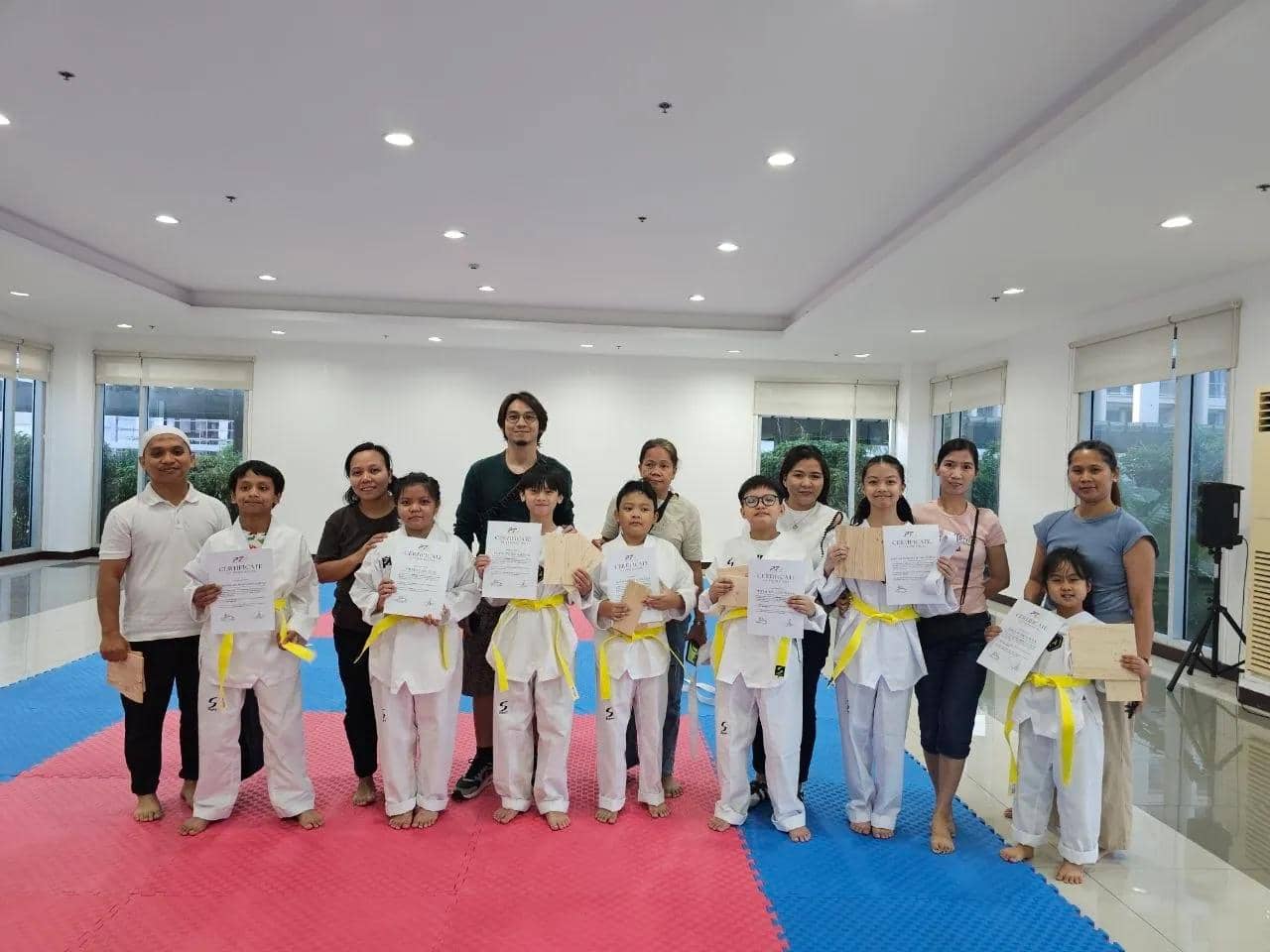
Simsa — Grading test/examination — the formal event where a student demonstrates their poomsae, technique, and (for eligible ranks) sparring in front of instructors to earn their next belt.
Il Su Sik (one-step sparring) — A structured drill where two students practice a single attack-and-response sequence at a controlled pace — a common bridge between forms and live sparring.
Why the Korean Terms Matter
Taekwondo is Korean in origin, and Kukkiwon rank certification — Poom and Dan — is administered by the same Korean governing body worldwide. Keeping the original vocabulary means your child's rank means the same thing whether they test in Manila, Seoul, or anywhere else in the world. It's not tradition for tradition's sake; it's what makes the certification portable and real.
Still confused by something your child said after class? Ask your coach — every term above is something we explain as a matter of course, not something you're expected to already know. Curious what it actually looks like in person? Book a free trial class and hear the vocabulary in context.